Introduction
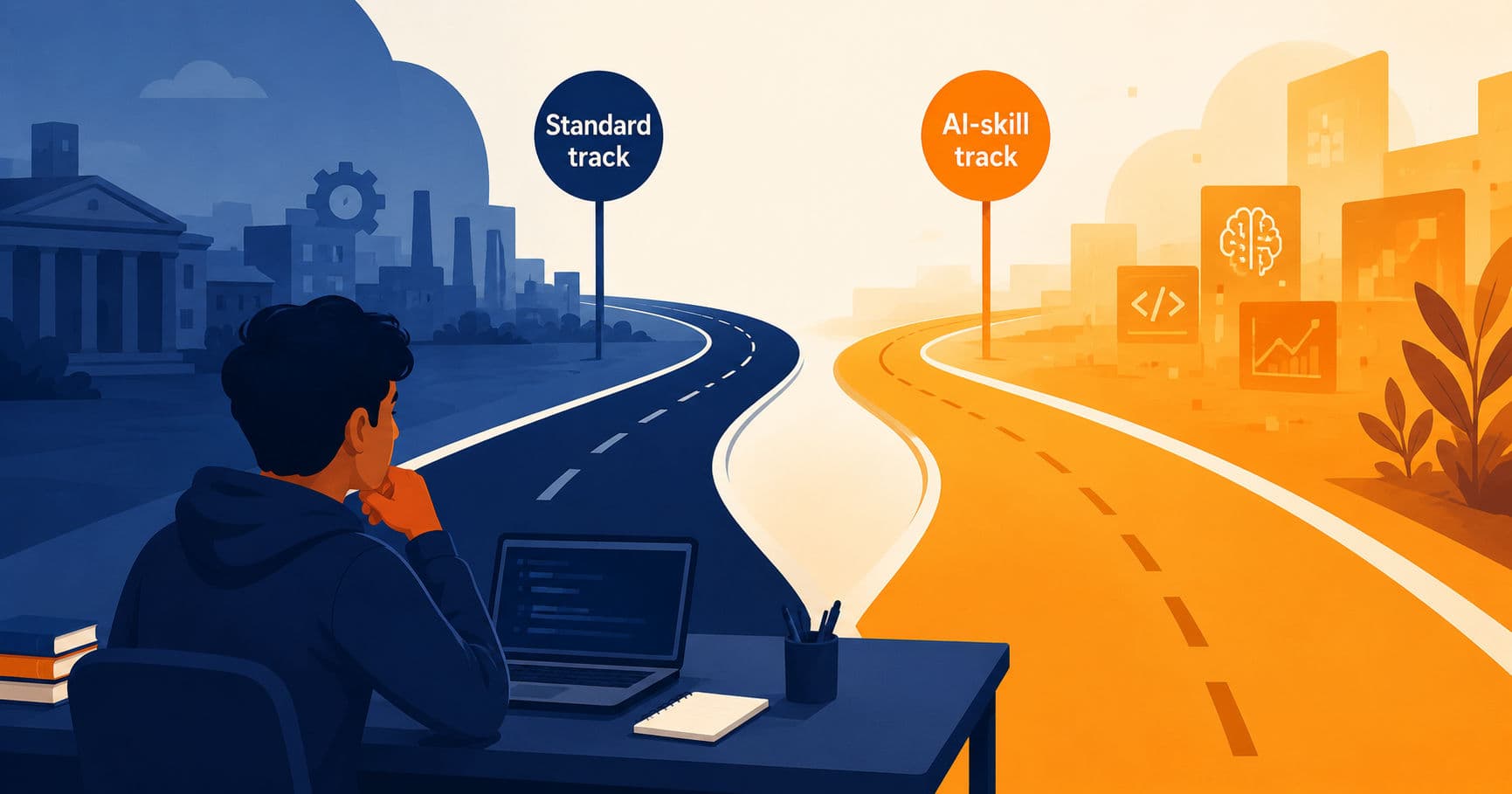
If you ask most engineering students today whether they "know AI," almost all of them will say yes. They use ChatGPT for assignments, Claude for debugging, and maybe a bit of Midjourney for fun. But ask a recruiter what "knowing AI" means in 2026, and you'll get a very different answer.
According to LinkedIn's Skills on the Rise 2026 report, the fastest-growing skill cluster in the job market right now is AI Engineering & Implementation — not AI usage. Employers are looking for people who understand retrieval-augmented generation (RAG), vector databases, prompt engineering, model fine-tuning, and frameworks like LangChain and FastAPI. This is a meaningful shift, and most students haven't caught up to it yet.
This article breaks down what AI engineering skills actually mean, why they matter for your internship and job search, and how to start building them without feeling overwhelmed.
Table of Contents
- What "AI Engineering" Really Means
- Why AI Usage Alone No Longer Impresses Recruiters
- The Core AI Engineering Skills in Demand
- How to Start Learning AI Engineering as a Student
- A Simple 30-Day Learning Roadmap
- Common Mistakes Students Make
- FAQ
- Conclusion
What "AI Engineering" Really Means
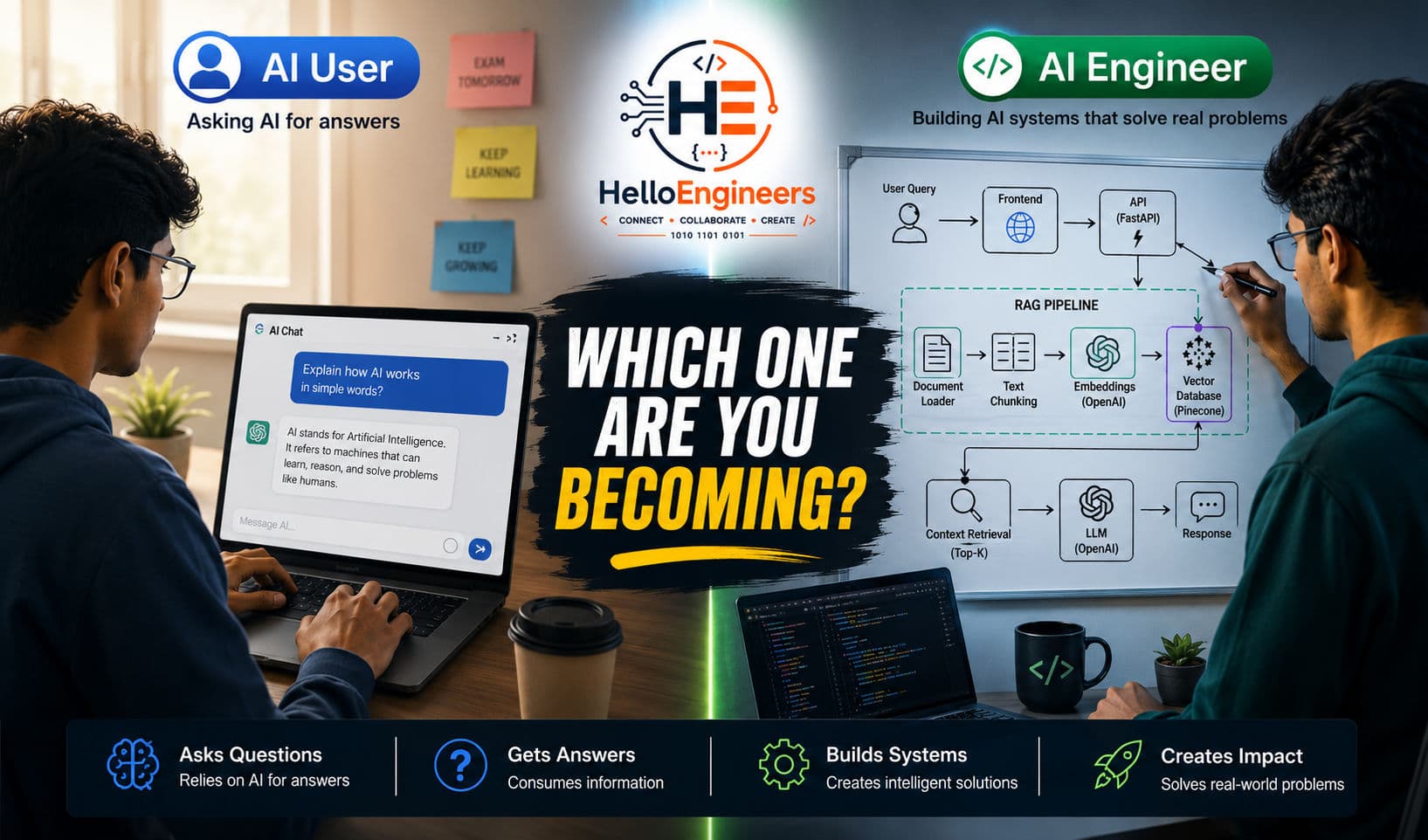
AI engineering is the practice of building systems and applications around AI models, rather than just using a chatbot interface. It sits between traditional software engineering and machine learning.
A student who "uses AI" opens a chat window and types a prompt. A student who practices AI engineering can:
- Connect a large language model to a custom knowledge base using RAG
- Store and search information efficiently using a vector database
- Build an API around an AI feature using a framework like FastAPI
- Fine-tune a smaller open-source model for a specific task
- Design prompts that are reliable, not just clever one-off tricks
The difference is the same as the difference between using an app and building one.
Why AI Usage Alone No Longer Impresses Recruiters
Two years ago, knowing how to prompt an AI tool well was a genuine advantage. In 2026, it's the baseline. Almost every student, marketer, and analyst uses AI tools daily, so listing "ChatGPT" or "prompting" as a skill on your resume doesn't stand out anymore.
At the same time, rising AI usage costs are pushing companies to be more selective about which models they use for which tasks, and where. This means companies increasingly need engineers who can architect efficient AI systems, not just people who can chat with a model. Reports on developer trends in mid-2026 also show intensifying competition among AI model providers, including a sharp rise in Chinese AI providers' market share on platforms like OpenRouter. This competition is driving faster innovation and more tools for developers to build with, which raises the bar for what "AI skilled" means.

In short: the market has moved from valuing AI users to valuing AI builders.
The Core AI Engineering Skills in Demand
Based on current hiring trends, here are the skills worth prioritizing:
Retrieval-Augmented Generation (RAG): Combining a language model with your own data source so it can answer questions accurately using real, specific information instead of guessing.
Vector Databases: Tools like Pinecone, Weaviate, or Chroma that store information in a way AI models can search through efficiently. Understanding embeddings is core to this.
Prompt Engineering: Not just writing prompts, but designing them systematically so they produce consistent, reliable outputs across different inputs.
LangChain and Similar Frameworks: Libraries that help you chain together AI model calls, tools, and data sources into a working application.
FastAPI (or similar backend frameworks): Since most AI features eventually need to be exposed as an API for a real product, backend skills remain essential.
Model Fine-Tuning Basics: Understanding how to adapt an existing model to a narrower task, even at a basic level, shows depth beyond surface-level usage.
MLOps Fundamentals: Knowing how AI features get deployed, monitored, and maintained in production, not just how they work in a notebook.
You don't need to master all of these before your next internship. Picking two or three and building something real with them puts you ahead of most applicants.
How to Start Learning AI Engineering as a Student
The mistake most students make is trying to learn everything through videos and courses without building anything. Here's a more effective approach:
-
Pick one narrow problem. Something like "build a chatbot that answers questions about my college's syllabus" is specific enough to be doable in a few days.
-
Build the smallest working version first. Don't aim for a polished product. Aim for something that technically works end to end.
-
Add one new concept at a time. Start with a basic prompt-based bot, then add RAG, then add a simple vector database, then wrap it in a FastAPI backend.
-
Document what you built. A short write-up or a LinkedIn post explaining your project does more for your visibility than a certificate.
-
Get feedback from a community. Peer feedback through a community like HelloEngineers can help you catch gaps in your understanding early, especially around system design decisions that tutorials rarely cover.
A Simple 30-Day Learning Roadmap
Week 1: Learn the basics of how LLMs work and get comfortable with prompt engineering fundamentals. Week 2: Learn about embeddings and vector databases; build a small semantic search tool. Week 3: Learn RAG and connect a language model to your own small dataset. Week 4: Wrap your project in a simple API using FastAPI and deploy it somewhere free, like Render or Railway.
By the end of the month, you'll have one working project you can talk about confidently in an interview, which is worth more than five completed courses with no project to show.
Common Mistakes Students Make
- Collecting certificates instead of building projects. Certificates rarely come up in interviews; projects almost always do.
- Learning tools in isolation. Knowing LangChain without understanding what problem RAG solves makes the knowledge fragile.
- Ignoring the backend side. Many students focus only on the AI part and skip learning how to actually ship a feature as an API or product.
- Copying tutorials without modification. Recruiters can tell the difference between a tutorial clone and a project with an original angle.
FAQ
Do I need a strong math background to learn AI engineering?
A basic understanding of statistics and linear algebra helps, but you don't need to master deep learning theory to build practical AI engineering projects. Tools like LangChain abstract away much of the underlying complexity.
Is AI engineering different from machine learning engineering?
Yes. Machine learning engineering often focuses on training and optimizing models from scratch. AI engineering focuses more on building applications and systems around existing pre-trained models, which is more accessible for students starting out.
Which programming language should I focus on?
Python remains the most practical choice, since most AI frameworks, including LangChain and FastAPI, are Python-first.
How long does it take to become job-ready in AI engineering?
With focused, consistent practice, most students can build a credible portfolio project within one to two months, though depth comes with continued practice over several months.
Will AI engineering skills still be relevant next year?
The specific tools may evolve, but the underlying concepts, connecting models to data, designing reliable systems, and understanding retrieval and embeddings, are foundational and likely to remain relevant even as tools change.
Conclusion
The AI skills gap in 2026 isn't about who uses AI tools the most. It's about who can build with them. Engineering students who move from being AI users to AI engineers, even at a beginner level, are positioning themselves for internships and jobs that most of their peers aren't ready for. Start small, build one real project, and let that project do the talking in your next interview.
If you're navigating this shift and want structured guidance, project ideas, or peer support, communities like HelloEngineers exist to help students figure out exactly this kind of roadmap without getting overwhelmed.