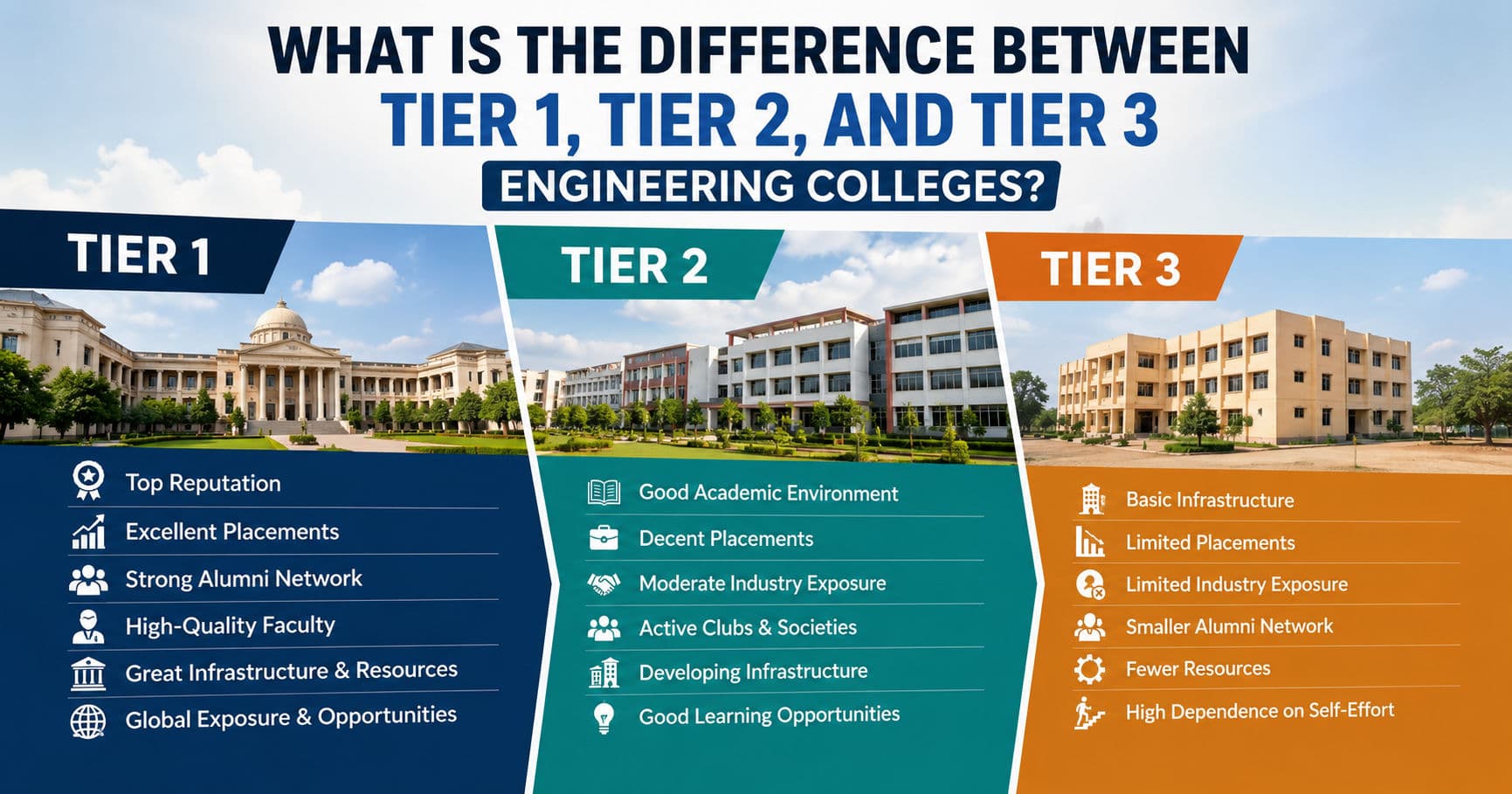
Every year, millions of students enroll in engineering colleges across India. During admissions, placements, and career discussions, one question often comes up: What is the difference between Tier 1, Tier 2, and Tier 3 engineering colleges?
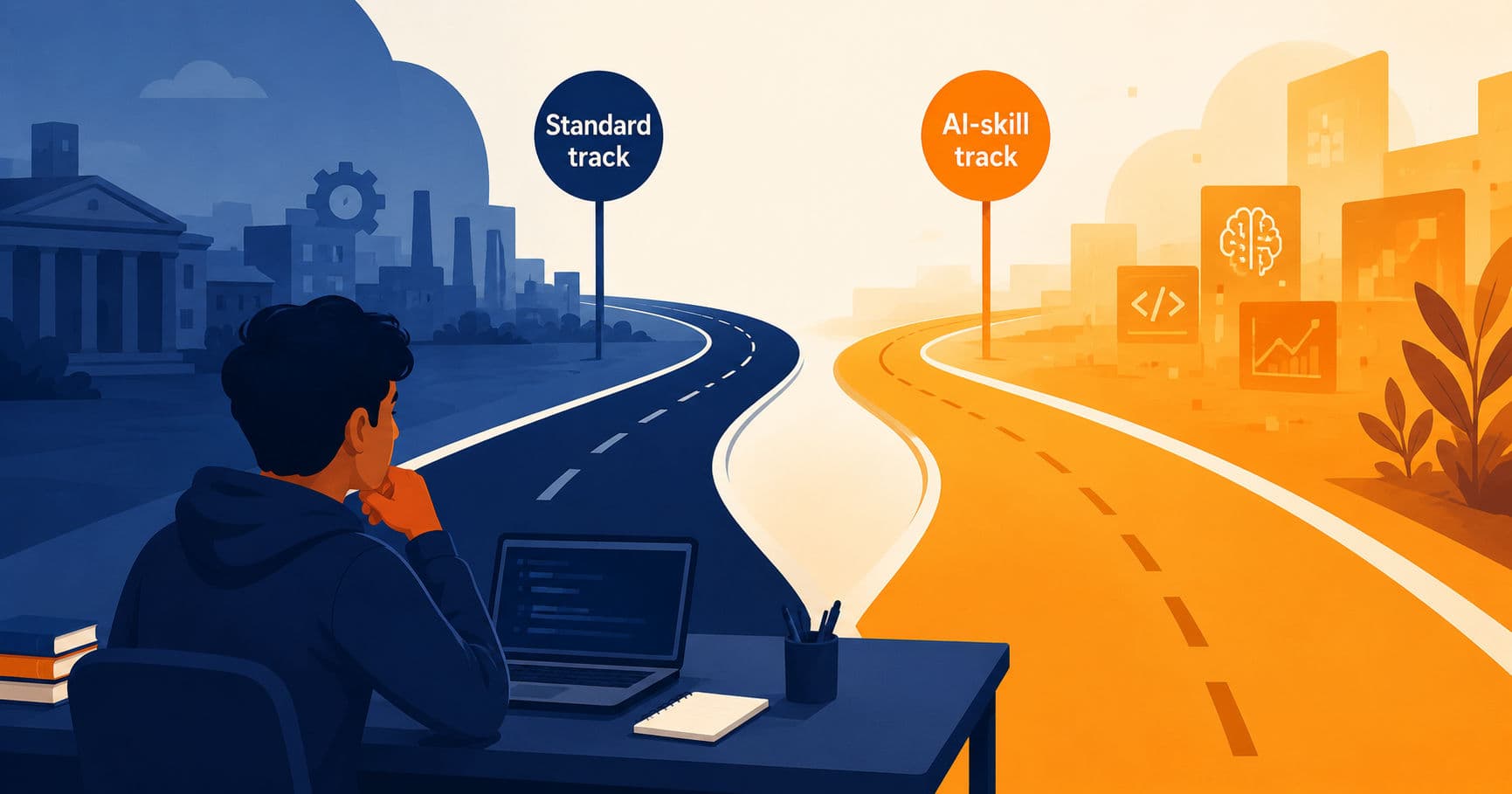
Many students believe that their future depends entirely on the college they attend. While college reputation can influence opportunities, it is not the only factor that determines success.
Let's understand the real differences between these college categories and what they mean for engineering students.
What Does the Tier System Mean?
First, it is important to know that "Tier 1," "Tier 2," and "Tier 3" are not official government classifications. These terms are commonly used by students, recruiters, and industry professionals to describe colleges based on factors such as:
Placement records Academic reputation Faculty quality Research output Industry exposure Alumni network Infrastructure
These factors collectively influence how colleges are perceived in the job market.
Tier 1 Engineering Colleges
Tier 1 colleges are considered the most prestigious engineering institutions in India.
Examples include:
IITs Top NITs BITS Pilani IIIT Hyderabad
Key Characteristics
Strong placement records Highly qualified faculty Excellent research facilities Global recognition Powerful alumni networks Frequent industry collaborations
Placement Opportunities
Top technology companies such as Google, Microsoft, Amazon, Nvidia, Qualcomm, and Goldman Sachs regularly recruit from these campuses.
Students often receive better access to internships, research programs, and international opportunities.

Tier 2 Engineering Colleges
Tier 2 colleges offer quality education and respectable placement opportunities but may not have the same level of recognition as Tier 1 institutions.
Examples include:
Many state universities Mid-ranked NITs Reputed private universities Government engineering colleges
Key Characteristics
Good academic environment Growing industry connections Active technical societies and clubs Moderate placement opportunities
Placement Opportunities
Companies such as TCS, Infosys, Wipro, Accenture, Cognizant, Capgemini, and many startups actively recruit from Tier 2 colleges.
Students often need to combine campus placements with off-campus job searches to maximize opportunities.
Tier 3 Engineering Colleges
Tier 3 colleges make up the largest segment of engineering institutions in India.
These colleges may have limited resources, fewer industry partnerships, and smaller placement programs compared to higher-tier institutions.
Common Challenges
Lower placement rates Limited industry exposure Fewer internship opportunities Smaller alumni networks Less access to research programs
Hidden Advantages
The rise of online learning, open-source development, remote internships, coding communities, and global networking platforms has significantly reduced the gap between college tiers.
Today, students can learn from the same online resources regardless of where they study.
Does College Tier Determine Success?
Not necessarily.
A college can provide opportunities, but long-term success depends on an individual's skills, dedication, projects, communication abilities, and professional network.
Many successful software engineers, startup founders, and technology leaders have graduated from Tier 2 and Tier 3 colleges.
At the same time, not every student from a Tier 1 college automatically achieves career success.
What Should Engineering Students Focus On?
Regardless of college tier, students should prioritize:
Building real-world projects Improving coding and technical skills Participating in hackathons Contributing to open-source projects Developing communication skills Gaining internship experience Building a professional network Staying updated with emerging technologies
In today's technology industry, skills often matter more than college labels.
The Role of Engineering Communities
One challenge many students face is the lack of access to mentors, industry professionals, and career opportunities.
Communities like HelloEngineers help bridge this gap by enabling students to connect with peers, collaborate on projects, discover internships, share knowledge, and build professional relationships.
Such communities can provide valuable support regardless of whether a student belongs to a Tier 1, Tier 2, or Tier 3 college.
Conclusion
Tier 1, Tier 2, and Tier 3 engineering colleges differ in terms of reputation, placements, industry exposure, and resources. However, these differences do not define a student's future.
In the modern technology landscape, success depends more on skills, continuous learning, practical experience, and networking than on the name of a college.
A college may influence your starting point, but your determination, effort, and willingness to learn will ultimately determine how far you go in your career.