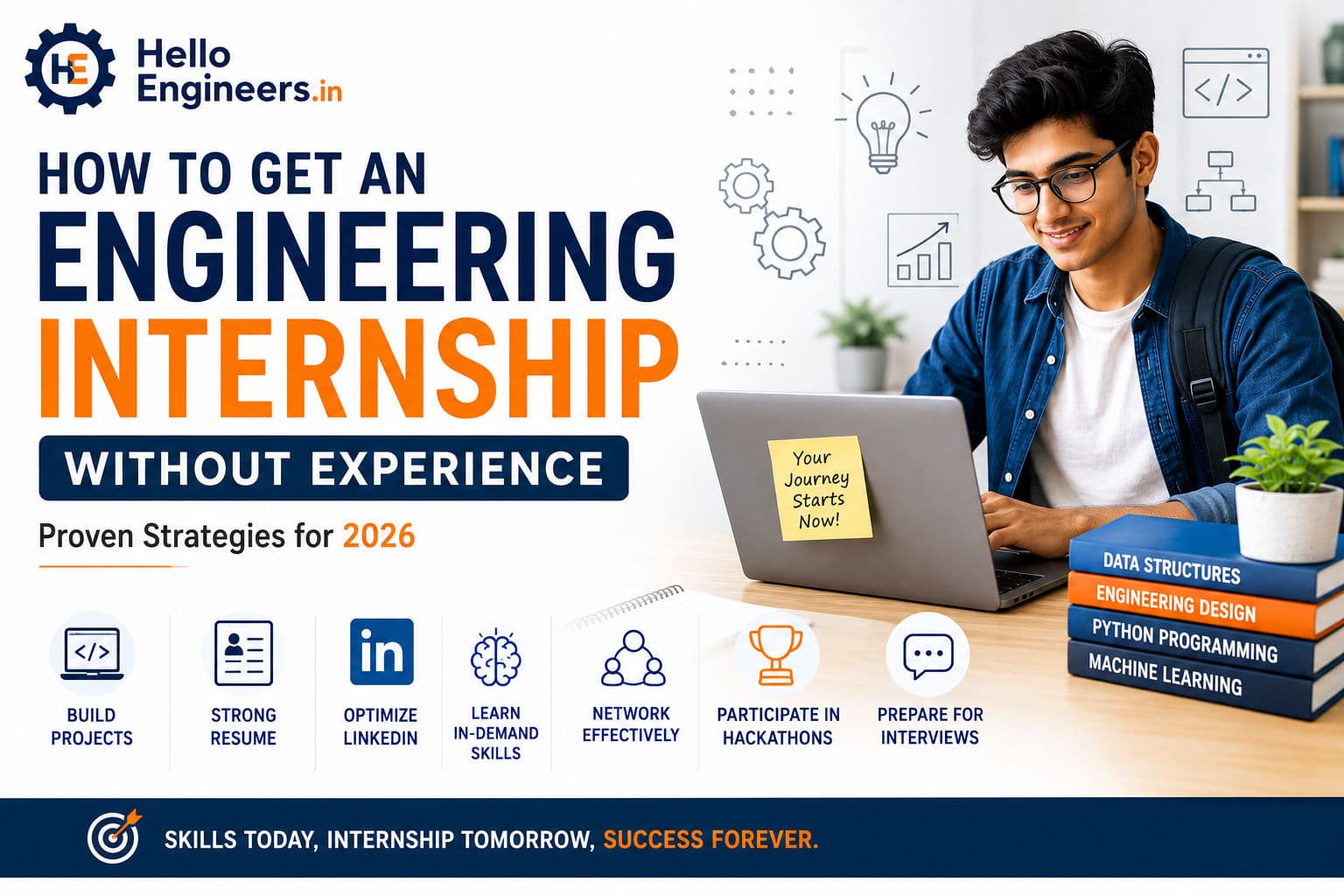
One of the biggest challenges engineering students face is getting their first internship. Most companies ask for experience, but how can students gain experience if nobody gives them an opportunity?
The good news is that thousands of engineering students secure internships every year without any professional experience. The key is to demonstrate skills, projects, and a willingness to learn.
In this guide, we will explore proven strategies that can help engineering students land internships in 2026.
Why Internships Matter
Internships provide real-world exposure and help students:
- Gain industry experience
- Build professional networks
- Improve technical skills
- Strengthen their resumes
- Increase chances of full-time job offers
Many companies prefer hiring candidates who have completed internships because they already understand workplace expectations.
Build Projects Instead of Waiting for Experience
The biggest mistake students make is waiting for opportunities.
Start building projects today.
Examples:
Computer Science Students
- Portfolio Website
- Chat Application
- AI Chatbot
- Task Management System
Mechanical Engineering Students
- CAD Design Projects
- Manufacturing Process Models
- Automation Concepts
Electrical Engineering Students
- Smart Home Systems
- Arduino Projects
- Renewable Energy Models
Civil Engineering Students
- Building Design Models
- Smart City Concepts
- Structural Analysis Projects
Projects prove your skills even when you have no internship experience.
Create a Strong Resume
Your resume should focus on:
Education
Mention:
- Degree
- College Name
- Expected Graduation Year
- Academic Achievements
Projects
Highlight:
- Project Name
- Technologies Used
- Outcomes Achieved

Skills
Examples:
- Python
- Java
- AutoCAD
- SolidWorks
- MATLAB
- C++
- Data Analysis
Certifications
Add relevant certifications from recognized platforms.
Optimize Your LinkedIn Profile
Recruiters actively search for interns on LinkedIn.
Make sure your profile includes:
- Professional profile photo
- Clear headline
- Skills section
- Project showcase
- Certifications
- Internship interests
Example Headline:
“Computer Science Student | Python Developer | Seeking Internship Opportunities”
Learn In-Demand Skills
Companies hire students who possess practical skills.
Popular skills in 2026 include:
- Artificial Intelligence
- Machine Learning
- Data Science
- Cloud Computing
- Cybersecurity
- Full Stack Development
- Automation
- CAD Design
- IoT Development
Investing time in these skills can significantly improve your chances.
Apply Consistently
Many students apply to only a few companies.
Successful candidates often apply to:
- 10–20 positions per week
- Startup internships
- Remote internships
- Campus opportunities
- Industry programs
Consistency increases visibility and opportunities.
Network with Professionals
Networking remains one of the most effective ways to secure internships.
Connect with:
- Alumni
- Industry professionals
- Recruiters
- Startup founders
- Engineering communities
Join engineering communities and participate in discussions to build relationships that may lead to internship opportunities.
Participate in Hackathons and Competitions
Hackathons help students:
- Demonstrate skills
- Build projects
- Collaborate with teams
- Gain recognition
Many companies recruit directly from hackathons and technical competitions.
Prepare for Interviews
Common internship interview topics include:
Technical Questions
- Programming concepts
- Engineering fundamentals
- Problem-solving skills
Behavioral Questions
- Tell me about yourself.
- Why do you want this internship?
- Describe a project you worked on.
- What challenges have you overcome?
Practice regularly to improve confidence.
Common Mistakes to Avoid
- Applying without customizing resumes
- Ignoring LinkedIn
- Not building projects
- Giving up after rejections
- Applying to very few companies
- Focusing only on large organizations
Avoiding these mistakes can dramatically improve your success rate.
Conclusion
Getting an engineering internship without experience is challenging but completely achievable. Companies value students who demonstrate initiative, practical skills, and a willingness to learn.
Focus on building projects, improving your resume, developing in-demand skills, networking effectively, and applying consistently. These strategies can help you secure your first internship and build a strong foundation for your engineering career.
The best time to start is today.
FAQs
Can I get an internship without any experience?
Yes. Projects, certifications, and practical skills can compensate for a lack of professional experience.
How many internships should I apply for?
Aim for at least 10–20 applications per week.
Are online internships valuable?
Yes. Many companies recognize remote internships and online work experience.
Which skills are most important in 2026?
AI, Machine Learning, Cloud Computing, Cybersecurity, Full Stack Development, and Data Science are among the most in-demand skills.
Do engineering internships lead to full-time jobs?
Many companies convert successful interns into full-time employees after graduation.