Your Complete Guide to the First Internship Journey
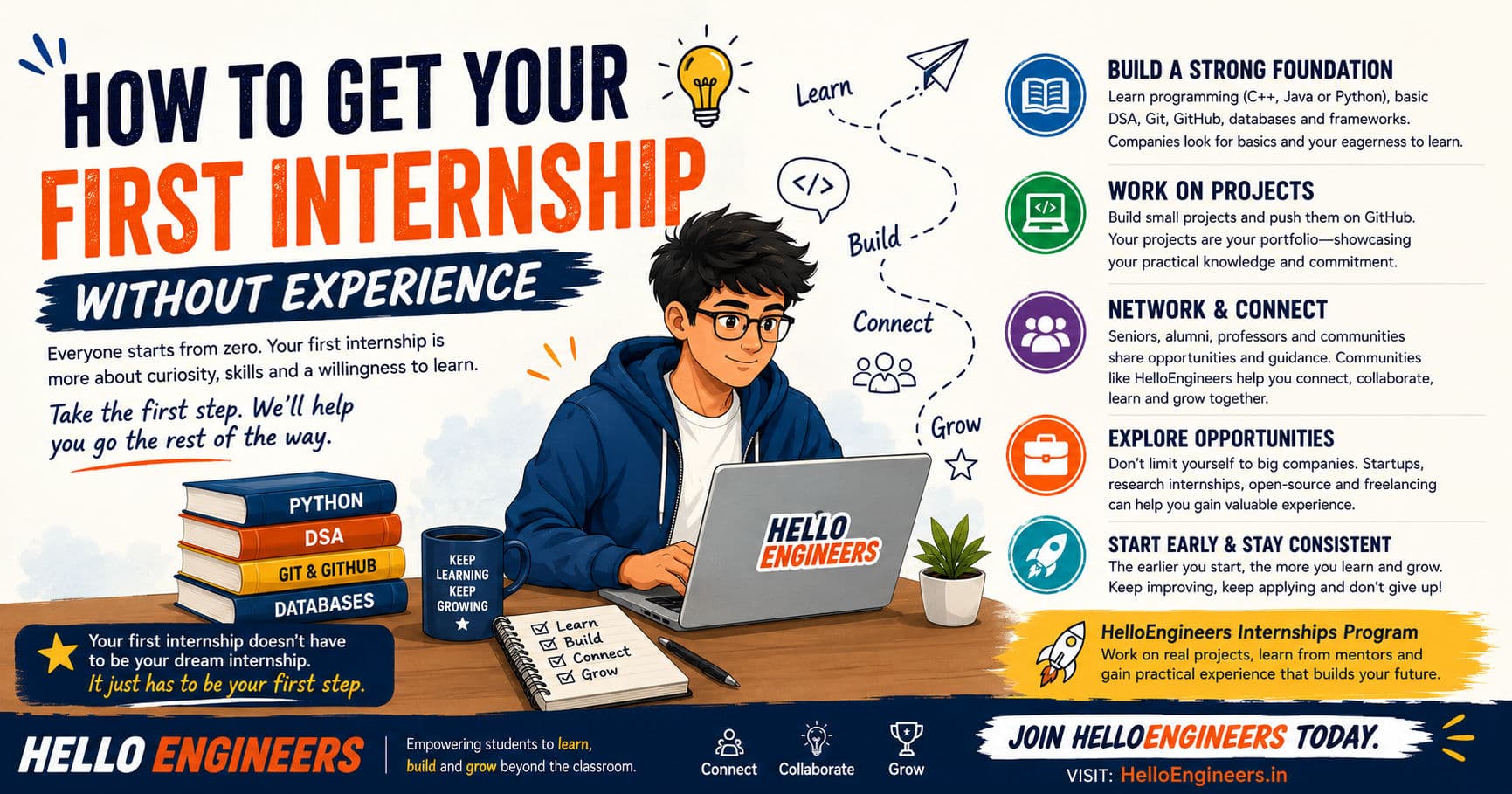
Internships play an important role in career development. They provide students with exposure to industry and help them understand how organisations work. One of the biggest questions among engineering students is “How do I get my First Internship?” Many students think that companies only hire students with tons of experience or exceptional projects. However, everyone starts from zero and getting your first internship is more about curiosity, skills and willingness to learn.
Build Skills Before Chasing
A lot of students start applying for internships in their first year without having skills to show. Before applying, students should focus on a strong foundation. For those who are interested in software development, learning programming languages like C++, Java or Python along with basic DSA can be beneficial. Apart from programming, having familiarity with Git, GitHub, databases and development frameworks can also help students stand out.
Work on Projects
Companies do not expect you to know everything but they do want you to have some basics. Projects are one of the best ways to showcase practical knowledge. Students do not need to build complex applications initially, even small projects can make a difference when presented properly. As your skills improve, you can gradually work on more complex projects.
Maintain an Active GitHub Profile
GitHub serves as an online portfolio for developers. Uploading projects and maintaining repositories allows recruiters to see a student’s work and commitment to learning. Even if you do not have enough experience, keeping your projects on GitHub shows recruiters that you are actively learning and building things.
Participate in Hackathons and Open Source
Hackathons provide valuable exposure to teamwork, problem-solving, and real-world development. Similarly, contributing to open-source projects helps students understand collaborative software development and practical experience. These experiences not only strengthen a resume but also improve technical and communication skills.
Build a Professional Network
Many opportunities come through connections. Seniors, alumni, professors and engineering communities share internship openings and provide relevant guidance for interviews. Communities like HelloEngineers can be helpful for students looking to connect with peers, collaborate on projects, discover hackathons and learn from others. Such communities create an environment where students can learn from one another and build professional relationships.
Apply Consistently
Students mostly focus only on large companies, overlooking smaller ones. But, the primary aim of the first internship should be gaining experience and learning about the industry. Opportunities can be explored through: HelloEngineers, LinkedIn, Intershala, Wellfound, or company career pages. Rejections are a normal part of the process and should not discourage applicants.
Don't Wait Until Third Year
There is a common misconception that internships are meant only for third-year students. In reality, starting early provides students with more time to explore different domains and build experience. Research internships, freelancing opportunities, open-source contributions and startup internships can all contribute to skill development and professional growth.
Final Thoughts
Getting your first internship is rarely a one-step process. It takes time, patience, and continuous learning. It might take longer than expected but once you get it, the journey becomes easier. Students who continue learning, build practical projects, engage with communities and apply regularly are more likely to find opportunities over time. And remember it does not have to be your dream internship, it just has to be your first step.
Frequently Asked Questions
1. Can I get selected for an internship without any experience?
Yes. Many companies hire students based on their willingness to learn, basic technical skills, and personal projects rather than previous work experience. A strong portfolio and consistent learning can help you stand out.
2. What skills should beginners focus on?
It depends on the role, but learning Python, Java, or C++, basic Data Structures and Algorithms (DSA), Git, GitHub, databases, and problem-solving fundamentals is an excellent starting point.
3. Where can engineering students find opportunities?
Students can explore openings through college placement cells, LinkedIn, company career pages, startup websites, hackathons, open-source communities, and online job portals.
4. When should engineering students start applying for internships?
Students can begin as early as their first or second year. Even if they don't get selected immediately, applying early helps them understand industry expectations and improve their profiles.
5. Do personal projects really matter?
Yes. Projects demonstrate practical knowledge and problem-solving ability. Even small, well-documented projects on GitHub can leave a positive impression on recruiters.
6. How can students improve their chances of getting selected?
Build relevant skills, create practical projects, maintain an active GitHub profile, network with seniors and professionals, tailor your resume for each role, and keep applying consistently.