Introduction
If you're an engineering student scrolling through tech news right now, you've probably seen the headlines: entry-level coding jobs are shrinking, AI is writing code faster than any fresher can, and companies are freezing junior hiring. It's unsettling, especially if you're a year or two away from graduating and building your resume around "software developer."
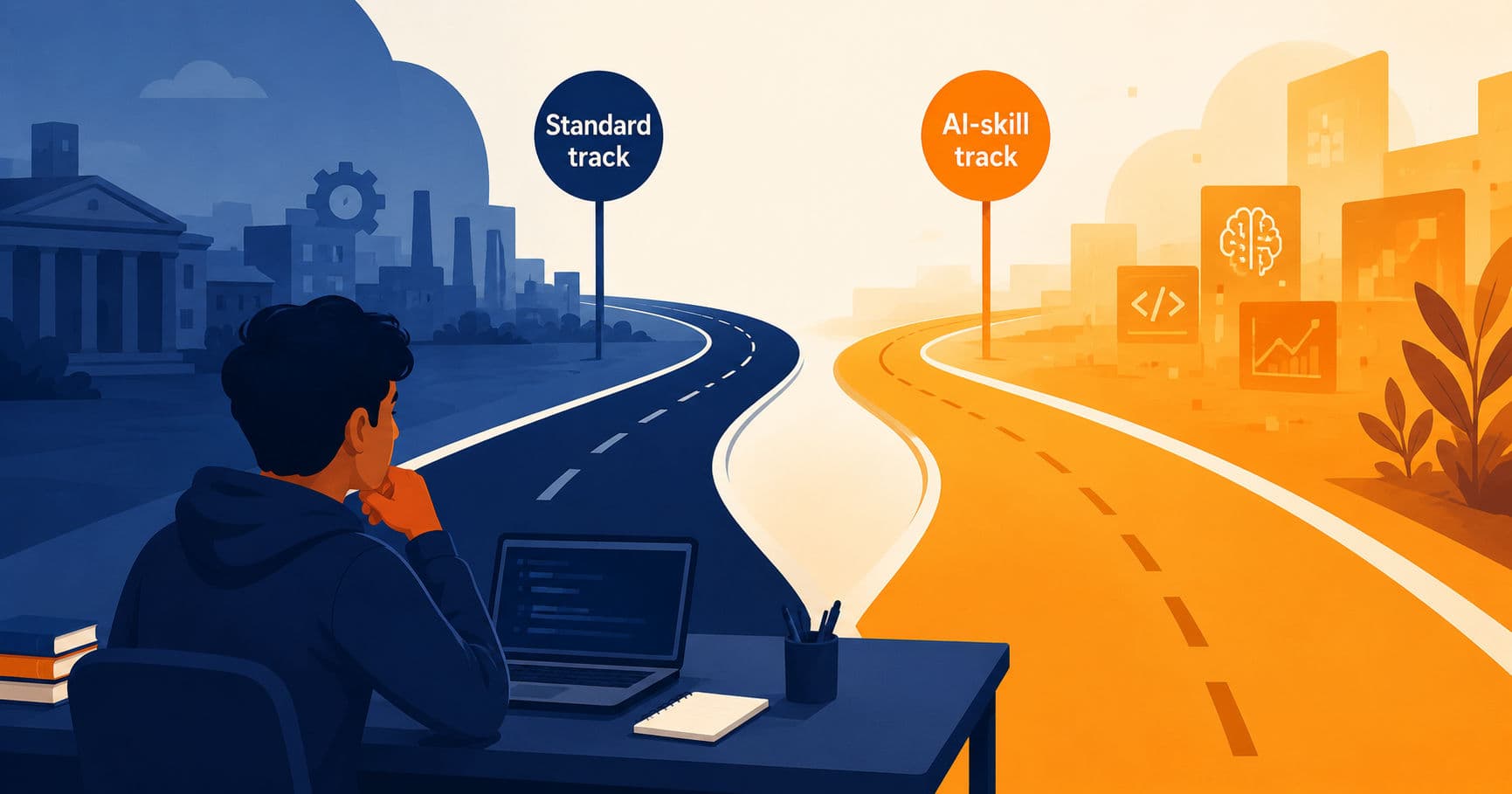
Here's the more useful way to think about it: the junior developer job isn't disappearing. It's being redefined. Companies aren't eliminating entry-level roles because they've stopped needing people — they're eliminating the specific tasks that AI tools now do faster and cheaper. What's left is a different, arguably more interesting job, and it rewards a different set of skills than the ones most college courses still teach.
This article breaks down what's actually happening in the market, what's genuinely being automated, what still requires a human, and a practical roadmap for staying hireable as an engineering student or fresher in 2026.
Table of Contents
- What's Really Happening to Junior Developer Hiring
- What AI Tools Are Actually Automating
- What Still Requires a Human Junior Developer
- Skills That Matter More Now Than Before
- A Practical Roadmap for Engineering Students
- How to Signal "AI-Ready" to Recruiters
- FAQ
- Conclusion
What's Really Happening to Junior Developer Hiring
The numbers are real, and it's worth understanding them before reacting to them. Entry-level hiring at large tech companies fell roughly 25% between 2023 and 2024. Computer science graduate unemployment has climbed to around 6.1%, with computer engineering graduates facing similarly tough numbers. Some major companies, including Salesforce, have publicly scaled back junior hiring, citing AI's ability to handle work that used to go to entry-level engineers.
At the same time, the picture isn't uniformly bleak. IBM has announced plans to triple entry-level software hiring in the US. GitHub Copilot's paid subscriber base grew 75% year-over-year, reaching 4.7 million users by January 2026 — which tells you AI coding tools are now mainstream infrastructure, not a novelty. Companies aren't asking "should we use AI coding tools." They're asking "how many fewer people do we need now that we do."
The honest summary: fewer junior roles overall, but not zero, and the roles that remain look different from what they used to be.
What AI Tools Are Actually Automating
To plan your career sensibly, it helps to be specific about what's changing. AI coding assistants are now genuinely good at:
- Writing boilerplate code and repetitive scaffolding
- Building simple CRUD (create, read, update, delete) functions
- Fixing minor, well-defined bugs
- Generating unit tests for straightforward logic
- Producing first-draft documentation and code comments
These were traditionally the exact tasks juniors cut their teeth on. A first-year hire would spend months writing CRUD endpoints and small fixes, learning the codebase along the way. That on-ramp is shrinking, because AI can do that work in seconds. This is the real source of the anxiety — not that "AI writes code," but that AI writes the specific code that used to be a junior's job description.

What Still Requires a Human Junior Developer
This is the part that gets lost in the panic headlines. AI-generated code still needs someone to:
- Review it critically. AI confidently produces code that looks correct but has subtle logic errors, security gaps, or doesn't fit the existing architecture.
- Integrate it into real systems. Connecting a generated function to a live database, an authentication system, or a production API requires judgment AI doesn't have.
- Make architectural decisions. Choosing between design patterns, weighing tradeoffs, and understanding why a solution fits a specific business context.
- Debug non-obvious failures. AI is strong on well-defined problems; it's noticeably weaker on messy, ambiguous, real-world bugs that span multiple systems.
- Communicate with humans. Talking to product managers, explaining technical constraints, and collaborating in stand-ups — none of that is automatable.
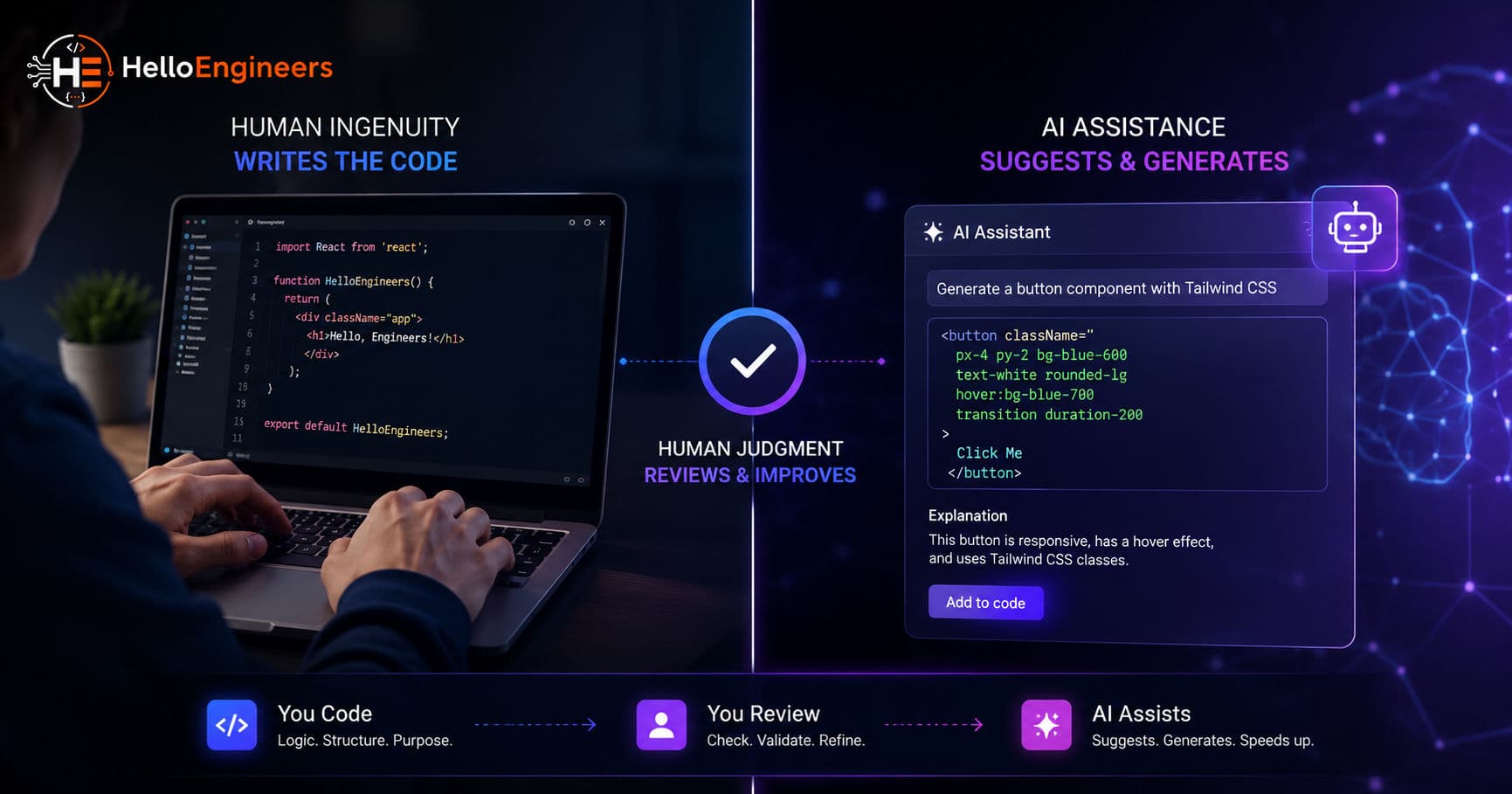
Employers now describe the ideal junior as someone who can prompt AI to generate a solution, then immediately spot what's wrong with it. That's a genuinely different skill from writing code line-by-line, and it's one most engineering programs haven't caught up to teaching yet.
Skills That Matter More Now Than Before
If you're planning your next 12–18 months as a student, here's where to put your energy:
AI fluency, not AI avoidance. Learn to use Copilot, Claude, or similar tools as a daily part of your workflow. Recruiters increasingly expect this by default, not as a bonus skill.
Code review and debugging. Practice reading code you didn't write — including AI-generated code — and finding what's broken. This is now a more valuable interview skill than reciting algorithms from memory.
System design fundamentals. Even at a junior level, understanding how pieces of a system fit together (databases, APIs, front end, deployment) sets you apart from someone who can only write isolated functions.
Full project ownership. Employers care less about GPA than they used to — only 42% plan to screen GPAs in 2026, down from 73% in 2019. What replaces GPA as a signal is real, shipped project work.
Communication and collaboration. The ability to explain a technical tradeoff clearly, in writing or out loud, is increasingly what separates candidates with similar technical skills.
A Practical Roadmap for Engineering Students
- Build 2–3 full-stack projects, not toy scripts. Ship something end-to-end: front end, back end, database, deployment. Use AI tools while building — that's expected now, not frowned upon.
- Get comfortable explaining your AI usage. Be ready to say what you asked AI to generate, what you changed, and why. This shows judgment, not just output.
- Prioritize internships over passive learning. Employers overwhelmingly value hands-on internship experience, and it remains one of the strongest predictors of a full-time offer.
- Contribute to open source or community projects. Real collaboration on real codebases teaches code review and integration skills that solo projects can't.
- Practice system design early. You don't need to be an expert, but being able to sketch how a simple app's pieces connect will set you apart in interviews.
- Network deliberately. Referrals and warm introductions matter more when hiring is tight. Communities like HelloEngineers exist specifically to help students build these connections, find project collaborators, and get realistic guidance on what recruiters are actually looking for right now.
How to Signal "AI-Ready" to Recruiters
On your resume and in interviews, be specific rather than vague. Instead of "familiar with AI tools," describe a project where you used AI to accelerate a specific task, and explain the judgment calls you made on top of it — what you changed, tested, or rejected. This demonstrates exactly the skill employers say they want: someone who directs AI rather than being replaced by it.
FAQ
Is AI actually going to eliminate all junior developer jobs? No. Hiring is down, not zero. Some companies are even increasing entry-level hiring. The roles that remain require different skills — reviewing, integrating, and improving AI-generated work rather than writing everything from scratch.
Should I stop learning to code manually and just rely on AI tools? No. You still need to understand what the code does to catch AI's mistakes. Employers are looking for people who can validate and improve AI output, which requires real coding knowledge underneath.
Which skills should I prioritize as a student right now? AI tool fluency, code review and debugging, basic system design, full project ownership, and clear communication. These matter more than memorizing algorithms for their own sake.
Do internships still matter if AI can do junior-level tasks? Yes, arguably more than before. Internships are where you learn to integrate code into real systems and work with real teams — the exact skills that are becoming more valuable, not less.
How can HelloEngineers help with this transition? HelloEngineers connects engineering students with project collaborators, internship guidance, hackathons, and a peer network to build the kind of hands-on, AI-integrated project experience recruiters are now looking for.
Conclusion
The fear that "AI is taking junior developer jobs" isn't baseless, but it's incomplete. What's actually happening is a redefinition of what a junior developer does day to day. The tasks that made up the old entry-level job — boilerplate, basic CRUD, small fixes — are increasingly automated. What remains, and what's growing in value, is judgment: the ability to direct AI tools, catch their mistakes, integrate their output into real systems, and communicate clearly about all of it.
For engineering students, the right response isn't panic and it isn't denial. It's adaptation. Build real projects, use AI as part of your workflow rather than avoiding it, get internship experience, and practice explaining your technical decisions. The junior developer job of 2026 looks different from the one your seniors had — but it's very much still there for students who prepare for the right version of it.