More Than Just Coding: The Value of Community
If you're studying Computer Science and your world begins and ends with lectures and assignments, you're probably missing out on a big part of what actually shapes a strong engineer. Real preparation for this field doesn't come only from finishing your syllabus — it comes from networking with the right people, working on real projects, and learning from those who've already walked the path. That's exactly why so many students today are actively looking for student communities to join, whether it's a Discord server, a GitHub organization, or a dedicated platform like HelloEngineers.
Why CS Students Need to Join a Community
College curriculum teaches you the fundamentals — data structures, algorithms, operating systems, databases. But the things that actually help you survive in the industry, like collaborating on real code, handling reviews, or working on production-level projects, rarely show up in a classroom setting. That gap is exactly what student communities fill.
When you become part of a good community, you stop struggling alone. You get peers who are going through the same journey, seniors who've already solved the problems you're stuck on, and sometimes even industry professionals who take out time to guide students. It becomes a support system that offers both motivation and direction, which is something a syllabus simply can't give you.
Let's look at these benefits in more detail.
The Networking Advantage
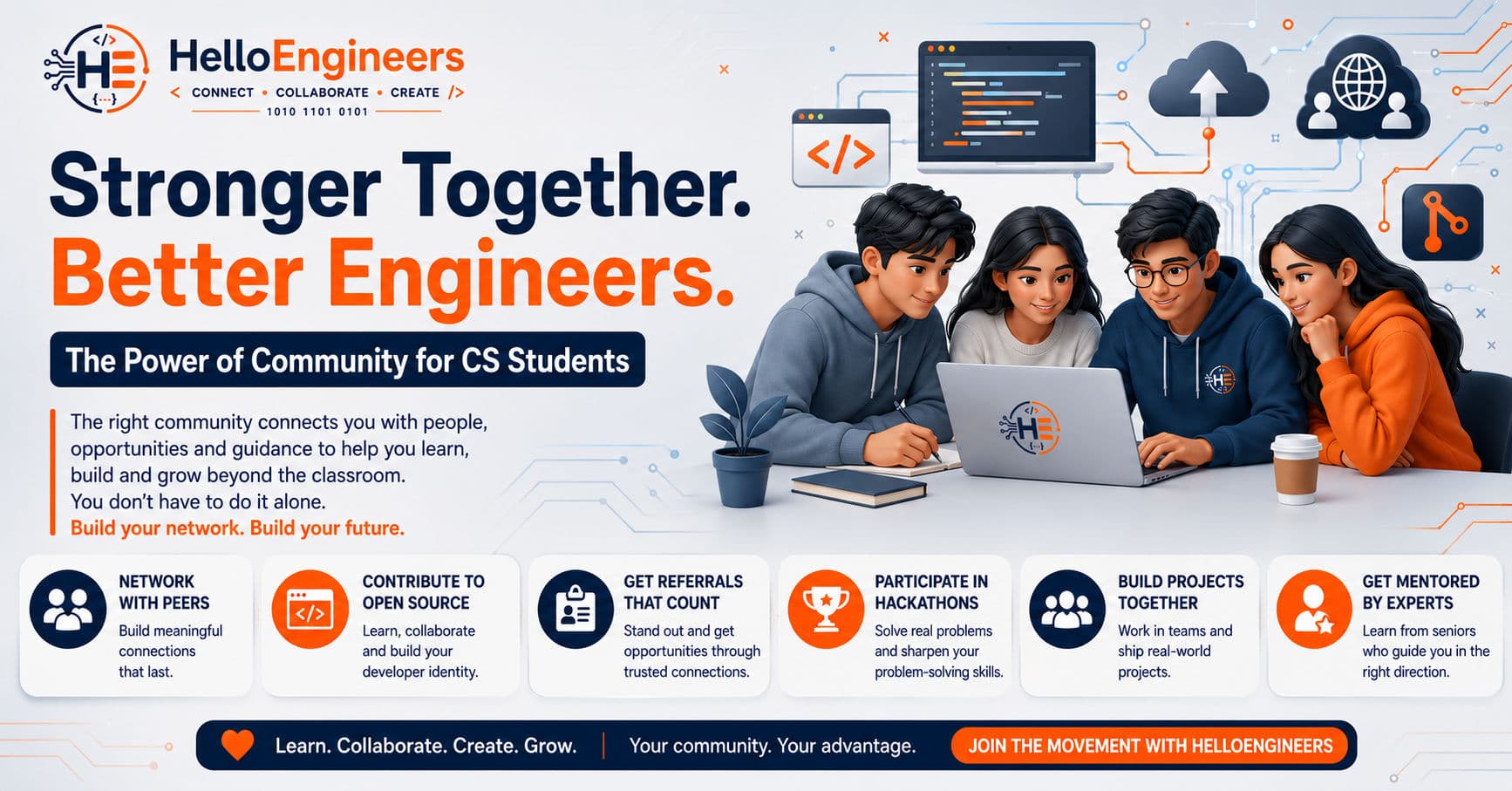
The word "networking" often makes people think of randomly connecting with strangers on LinkedIn. But real networking is a lot more meaningful than that. When you stay active in a CS-focused community, you naturally cross paths with people who can matter at different stages of your career — a batchmate who starts a company and later brings you in as a co-founder, or a senior who ends up referring you at their workplace.
These connections build organically, simply by showing up, joining discussions, answering doubts, or contributing to group projects. That's why networking shouldn't be treated as a transactional activity. It works best when it's approached as genuine relationship building over time.
Open Source Contribution and Its Role
Contributing to open source has become almost essential if you want your resume to stand out. But finding the right project, picking a suitable issue, and sending your first pull request can feel intimidating, especially for beginners who are figuring it out on their own.
This is where communities step in. Good student communities run beginner-friendly open source programs, guide contributors through the process, and create a safe space where making mistakes is treated as part of learning, not something to be embarrassed about. You end up learning more than just code — version control, collaboration workflows, and working with real codebases, all of which come in handy during interviews.
Referrals That Make Job Hunting Easier
During placement season, nothing carries more weight than a referral. Companies trust referrals from their own employees because someone is already vouching for you. But referrals don't just appear out of nowhere — they usually come from people who know you or have seen your work.
This happens naturally inside active student communities. When people see you consistently performing well in hackathons or contributing to open source, trust builds up over time. And that trust is what eventually turns into a referral, without you having to send a single cold message.
How Hackathons Build Skills and Confidence
Hackathons aren't just about winning prizes. A 24- or 36-hour hackathon teaches you how to work under pressure, make fast decisions as a team, and ship a working product within a tight deadline. It's a skill set that no textbook can really teach you.
Most CS-focused communities either host regular hackathons themselves or help students form teams for national-level ones. This also makes it easier to find teammates who share your interests or match your skill level, instead of scrambling to find a team the night before registrations close.
Working on Projects Collaboratively
Solo projects have their place, but collaborative projects teach you something different — handling code reviews, resolving merge conflicts, working against deadlines, and communicating with teammates. These are exactly the skills companies expect once you're actually on the job.
Student communities often run structured group project programs where you can join a team based on your interest, whether that's web development, machine learning, or app development. It's a low-pressure way to experience what real team-based development actually feels like.
Mentorship That Gives You Direction
Perhaps the most underrated benefit of all is mentorship. In your first or second year, there's a lot of confusion — which tech stack to learn, when to start DSA, when to apply for internships. A mentor who's already been through it can save you from wasting time on the wrong things.
Communities bridge this gap by connecting juniors with seniors or working professionals. Sometimes it's a formal mentorship program, and sometimes it's just a casual question asked in a Discord channel that a senior happens to answer. Both are valuable in their own way, and neither would exist without a community around it.
Comparing Popular CS Student Communities
Here's a quick comparison of some well-known student communities among CS students:
| Community | Focus Area | Best For | Community Type |
|---|---|---|---|
| GitHub Student Community | Open source, developer tools access | Contributors, developers | Global, online |
| GDSC (Google Developer Groups) | Workshops, tech events | Campus-level learning | College chapters |
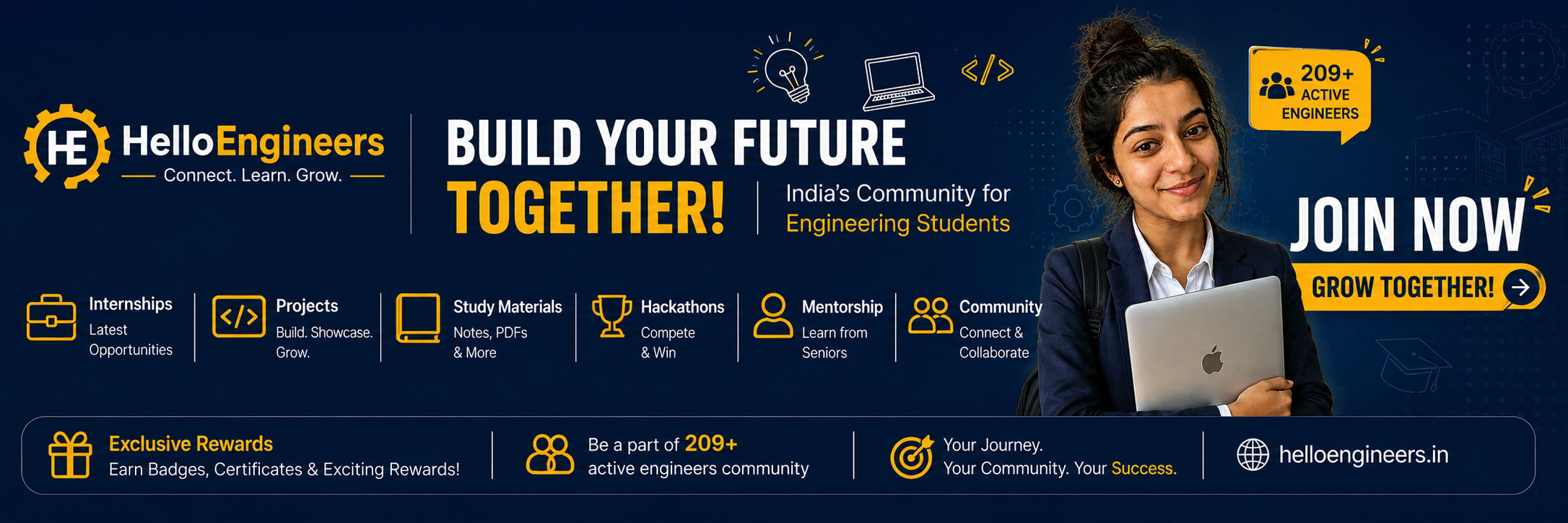
| HelloEngineers | Projects, hackathons, mentorship, referrals | End-to-end CS student growth | Modern, online-first |
| LinkedIn CS Groups | Networking, job updates | Passive networking | Loosely structured |
| Discord Coding Servers | Doubt-solving, peer chat | Quick help, casual learning | Informal, chat-based |
As the table shows, each community brings its own strength to the table. GDSC works well for campus-level events, GitHub is great for open source, and LinkedIn groups are useful for passive networking. But if you're looking for one place that brings together networking, open source, hackathons, projects, and mentorship, newer, modern student communities like HelloEngineers tend to fill that gap, since they're built with the entire CS student journey in mind rather than just one piece of it.
Features to Look For in a Good Student Community
Not every community is built the same way. Before joining one, it's worth checking for these things:
Active participation: How many members are actually active, since a high member count on paper doesn't mean much on its own.
Structured programs: Are there proper hackathons, mentorship sessions, or project collaborations happening, or is it mostly random, unorganized chatter.
Real industry connect: Are working professionals or alumni involved, or is it just students talking to other students.
Beginner friendliness: How quickly new members feel comfortable, and whether basic doubts are taken seriously instead of being brushed off.
Growth opportunities: Whether referrals, internships, or open source contributions are actually tracked and encouraged, not just mentioned occasionally.
Checking these factors before committing your time can save you from joining a community that looks active but doesn't really offer much once you're inside it.
Success Tips: Getting the Most Out of a Community
Simply joining isn't enough. Here are a few practical tips that actually make a difference:
- Don't just lurk, participate. Take part in discussions, ask questions, and try answering others' doubts when you can.
- Stay consistent. Being active for one day and disappearing for two months won't get you anywhere. Give it some time every week instead.
- Start a small project and share it with the community. Asking for feedback pushes you to improve faster than working in isolation.
- Connect with seniors casually, not only when you need something from them. Genuine relationships take time to build.
- Try a few communities before settling in. Once you find one that works best for you, invest deeply, whether that's a specific Discord server or an all-in-one platform like HelloEngineers.
- Don't forget to showcase your work. The more you share your projects, contributions, or hackathon experience, the sooner people start noticing and remembering you.
Final Thoughts
Computer Science engineering isn't just about learning to code, it's a continuous learning journey where having the right people and resources around you makes a real difference. Student communities provide exactly that bridge between college and industry, covering everything from networking to open source, referrals, hackathons, projects, and mentorship.
Whether you join GDSC, explore open source through GitHub, or become part of a modern community like HelloEngineers that brings all of this together in one place, what matters most is that you actively become part of some student communities. Because the sooner you take that step, the sooner you'll start seeing real clarity, confidence, and opportunities show up in your CS journey.
Frequently Asked Questions
1. Why should computer science students join a community?
Communities provide networking opportunities, mentorship, project collaboration, hackathons, career guidance, and practical learning beyond classroom education.
2. Do student communities help in getting internships?
Yes. Active participation improves technical skills, expands professional networks, strengthens resumes, and can increase opportunities for referrals and internships.
3. How do hackathons benefit computer science students?
Hackathons help students apply technical knowledge, collaborate with teams, solve real-world problems, and build projects that strengthen their portfolios.
4. Is open-source contribution important for placements?
Open-source contributions demonstrate practical coding experience, collaboration skills, familiarity with GitHub, and the ability to work on real software projects.
5. What makes HelloEngineers useful for CS students?
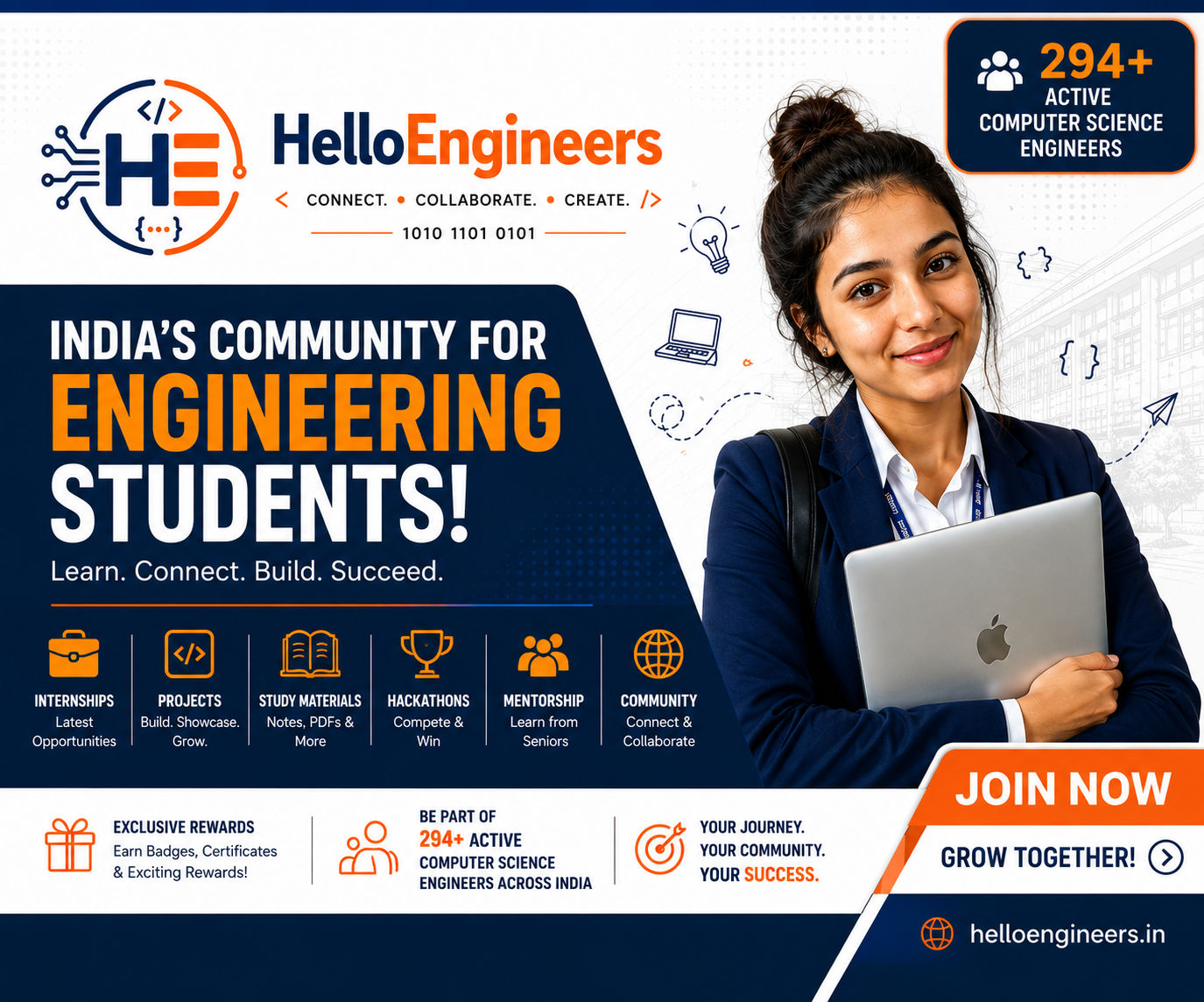
HelloEngineers provides workshops, hackathons, collaborative learning opportunities, mentorship, networking, and career-focused initiatives that help students develop practical skills beyond academics.
6. When is the best time to join a student community?
The earlier, the better. First- and second-year students benefit the most because they have more time to build skills, projects, and professional connections before placements.