Full-Stack Developer Roadmap: Frontend to Backend Guide
If you've spent any time browsing developer forums or LinkedIn, you've probably noticed how often people ask the same question: how do I actually become a full-stack developer? There's no shortage of opinions, and honestly, a lot of the advice out there is either too vague or too overwhelming. This full-stack developer roadmap is designed to cut through the noise and provide a practical path, starting from the basics of frontend work and progressing all the way to backend systems and deployment.
What Does a Full Stack Developer Actually Do?
Before jumping into the roadmap itself, it helps to understand what the role involves. A full-stack developer works on both the client side (what users see and interact with) and the server side (databases, APIs, business logic). You're not expected to be a world-class expert in every single technology, but you do need enough depth to build a working application end to end, and enough breadth to understand how the pieces fit together.
Step 1: Learn the Web Fundamentals
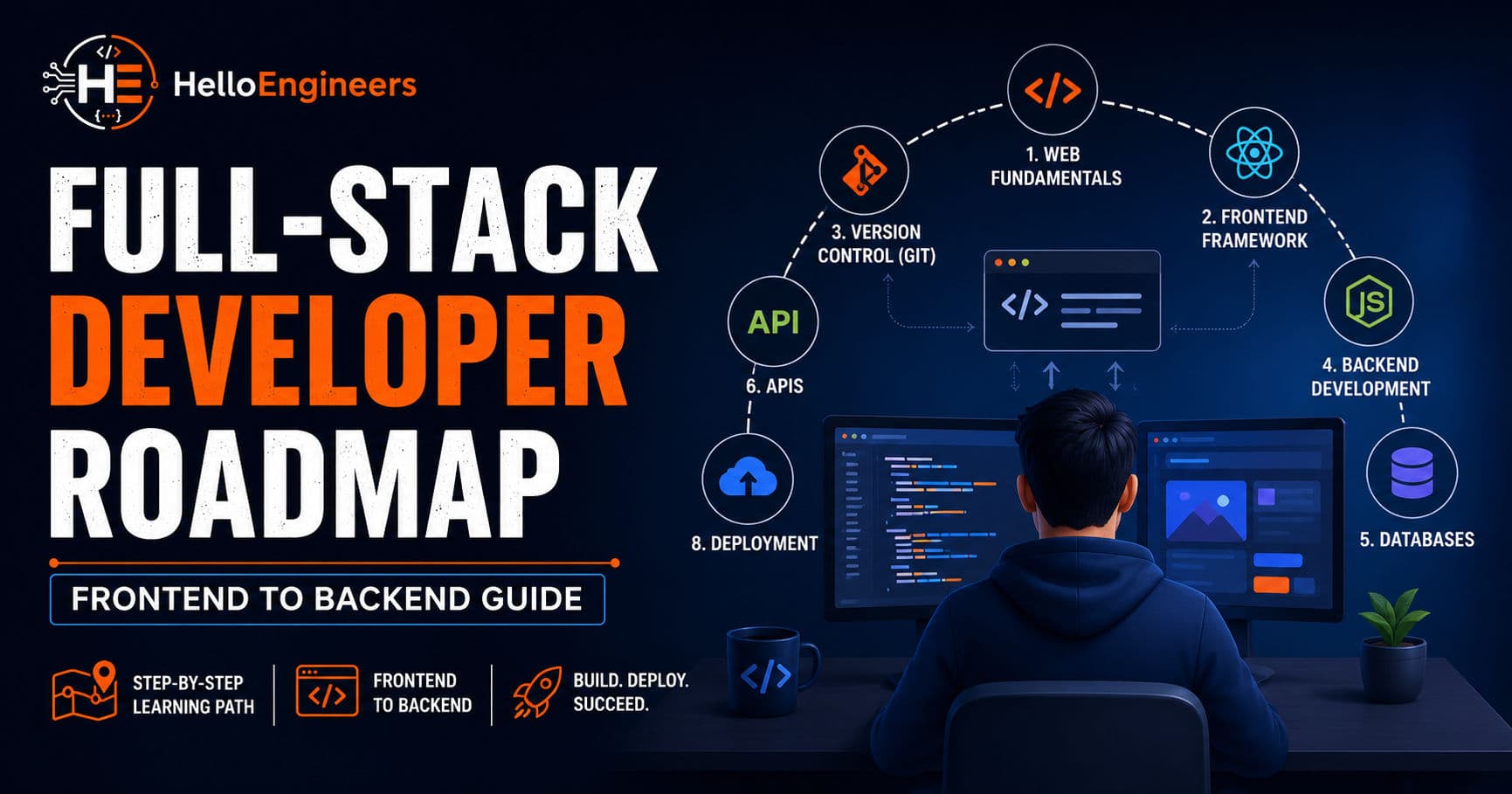
Every full-stack developer roadmap should start here, and there's a good reason for that. HTML gives structure to a page, CSS handles the visual styling, and JavaScript adds interactivity. Skipping this stage or rushing through it tends to cause problems later, especially when you're debugging layout issues or trying to understand why a script isn't behaving the way you expected. Spend real time here. Build small projects, break them, fix them, and repeat.
Step 2: Get Comfortable with a Frontend Framework
Once the fundamentals feel natural, it's time to pick up a frontend framework. React is the most popular choice right now, though Vue and Angular also have solid communities behind them. The goal at this stage isn't just to memorize syntax; it's to understand concepts like component-based architecture, state management, and how data flows through an application. Pick one framework and go deep rather than hopping between three or four half-learned ones.
Step 3: Understand Version Control
This part often gets overlooked in tutorials, but Git is something you'll use every single day as a developer. Learn how to commit changes, create branches, resolve merge conflicts, and work with platforms like GitHub or GitLab. It's not glamorous, but it's one of those skills that quietly separates hobbyists from people who can actually work on a team.
Step 4: Move Into Backend Development
This is where a lot of frontend-focused learners hit a wall, mostly because backend development feels like a different world. Pick a backend language such as Node.js, Python, or Java, and start learning how servers work, how to build APIs, and how to handle requests and responses properly. Node.js is a fairly common pick for people coming from a JavaScript background since the syntax already feels familiar.
Step 5: Learn Databases
No full-stack developer roadmap is complete without database knowledge. You'll want exposure to both relational databases like PostgreSQL or MySQL and NoSQL options like MongoDB. Learn how to design schemas, write queries, and understand when one type of database makes more sense than the other for a given project. This is also a good point to start thinking about data relationships and how they affect application performance.
Step 6: Build and Connect APIs
With frontend and backend skills in place, the next step is learning how to connect them. This usually means building RESTful APIs, or exploring GraphQL if you want more flexibility in how data is fetched. Practice sending requests from your frontend to your backend, handling errors gracefully, and structuring your endpoints in a way that actually makes sense six months later when you revisit the code.
Step 7: Learn Authentication and Security Basics
Security tends to be an afterthought for a lot of beginners, which is understandable but risky. Learn how authentication works, including sessions, tokens, and OAuth. Understand common vulnerabilities like SQL injection and cross-site scripting, even at a basic level. You don't need to become a security expert overnight, but you should know enough to avoid the most obvious mistakes.
Step 8: Get Familiar with Deployment and DevOps Basics
At some point, your application needs to actually go live. Learn the basics of deploying applications using platforms like Vercel, Render, or AWS. Understanding Docker and basic CI/CD concepts will also make you far more employable, since most modern teams expect at least a working knowledge of these tools.
Step 9: Build Real Projects
Reading and watching tutorials only gets you so far. The real learning happens when you build something from scratch, run into problems nobody warned you about, and figure out how to solve them. Try building a small e-commerce site, a blog platform with user authentication, or a task manager with a proper database behind it. These projects become the backbone of your portfolio.
Final Thoughts
Following a full-stack developer roadmap isn't about rushing through a checklist as fast as possible. It's about building a genuine understanding of how the frontend and backend work together, piece by piece. Some people move through this path in six months, others take a couple of years, and both are perfectly fine. What matters more than speed is consistency, and being willing to actually build things instead of just reading about them.
Frequently Asked Questions
1. How long does it take to become a full-stack developer?
For most beginners, it takes around 6–12 months of consistent learning and project building. The timeline depends on your learning pace and practice.
2. Which frontend framework should beginners learn?
React is a popular choice due to its large community, extensive resources, and widespread industry adoption.
3. Do I need to learn both SQL and MongoDB?
It's helpful to understand both. Start with an SQL database like MySQL or PostgreSQL, then learn MongoDB to understand NoSQL concepts.
4. Is DSA required for full-stack development?
DSA isn't required to build web applications, but it is important for coding interviews and writing efficient solutions.
5. Can I get a job with projects but no experience?
Yes. A strong portfolio with well-built projects, GitHub repositories, and practical skills can significantly improve your chances of landing an entry-level full-stack developer role.